

Last Updated on 2025-11-10
Seeing your betta suffer from ammonia poisoning is terrifying. This is a serious, life-threatening emergency situation, but if you act quickly and decisively, you can often save your fish. Ammonia poisoning is caused by a build-up of toxic waste in the water, and the solution is to remove the ammonia and stabilize the environment immediately.
⚠️ MEDICAL DISCLAIMER: This guide provides emergency first aid for betta ammonia poisoning. For severe cases, fish showing no improvement after 48 hours of treatment, or if you’re uncertain about any aspect of treatment, consult a qualified aquatic veterinarian immediately. Ammonia poisoning can cause permanent organ damage and requires professional assessment in advanced cases.
🚨 EMERGENCY ACTION PLAN: What To Do RIGHT NOW
Time is critical. Follow these steps immediately if you suspect betta ammonia poisoning:
- DO NOT move your fish to a new tank – the shock could be fatal
- Perform an immediate 50% water change using dechlorinated water that is exactly the same temperature as the tank
- Dose the entire tank with ammonia detoxifier like Seachem Prime or Kordon AmQuel+ immediately – this neutralizes ammonia for 24-48 hours
- Increase surface agitation by lowering the water level slightly or aiming the filter output upwards to maximize oxygen
- DO NOT FEED your betta – feeding adds more waste and ammonia to an already toxic environment
- Read the rest of this guide for next steps and long-term prevention
Act now, read later. Complete these steps before continuing with this article.
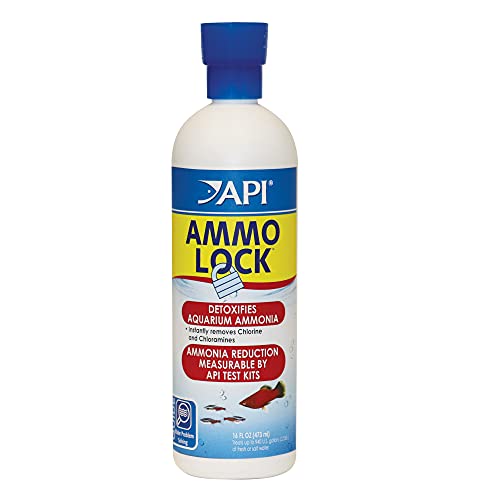
- Contains one (1) API AMMO-LOCK Freshwater and Saltwater Aquarium Ammonia Detoxifier 16-Ounce Bottle
How to Confirm Ammonia Poisoning: The Key Symptoms
You need quick confirmation that you’re dealing with ammonia poisoning in betta fish. Here’s a scannable checklist of symptoms – if your betta shows 3 or more of these signs, ammonia poisoning is highly likely:
| Symptom | What To Look For |
|---|---|
| Gasping For Air | Frantically swimming to the surface or staying there constantly, mouth at water surface |
| Red or Purple Gills | Gill color changes from normal pink to bright red or purple – THIS IS THE #1 SIGN |
| Lethargy | Lying at the bottom of the tank, barely moving, unresponsive to stimuli |
| Clamped Fins | Fins held tightly against the body instead of flowing naturally |
| Loss of Appetite | Refusing all food, even favorite treats |
| Red Streaks or Burns | Red streaking along body and fins, inflamed areas that look like chemical burns |
| Inflamed Eyes/Anus | Swollen, red, or protruding eyes; inflamed anal opening |
Critical Warning: If you notice red or purple gills, your betta is experiencing severe ammonia burns. This is an absolute emergency requiring immediate action.
Gasping For Air
One of the initial signs of ammonia poisoning is your betta desperately gasping for air at the top of the tank. As ammonia begins to burn your betta’s gills, he desperately seeks oxygen from a clean source while simultaneously trying to escape the toxic water. This isn’t normal surface breathing – it’s frantic, constant, and accompanied by labored gill movement.
Red or Purple Gill Color (The Smoking Gun)
This is the biggest and most definitive sign of ammonia poisoning, and if you notice it you must begin acting immediately. The gills will turn from their normal pale pink color to bright red or deep purple as ammonia chemically burns the delicate gill tissue. As ammonia poisoning becomes more severe, you may even notice your betta’s gills bleeding or appearing inflamed and swollen.
Red Streaks Along Body and Fins
Because ammonia slowly damages your betta’s body through chemical burns, you may notice red streaking along his body and fins. However, it’s important you don’t confuse these streaks with stress stripes, which can occur when your betta is stressed. Ammonia burn streaks appear more inflamed and raw, often accompanied by tissue damage.
Inflamed Eyes or Anus
Ammonia also attacks the most sensitive areas of your betta’s body – primarily his eyes and anus. These areas may become severely inflamed, swollen, and irritated as the toxic ammonia causes chemical burns to delicate tissues.
Loss of Appetite
Whenever your betta loses his appetite, something is seriously wrong. Ammonia poisoning causes severe physical distress that makes eating impossible or undesirable. However, be aware that loss of appetite can be caused by a whole range of diseases as well as stress and depression, so look for other confirming symptoms.
Lethargy and Listlessness
Your betta may stop swimming entirely, spending most of his time lying motionless at the bottom of the tank. This extreme lethargy occurs because ammonia poisoning is systemically shutting down his body. However, remember that lethargy can also be caused by constipation, dropsy, swim bladder disease, and other conditions.

The Step-by-Step Treatment Guide
Now that you’ve completed the emergency first aid, here’s your complete recovery protocol. The only way to treat betta ammonia poisoning is by lowering ammonia to 0 ppm (parts per million) and maintaining it there.
Step 1: Daily Water Changes & Ammonia Detoxifier Dosing
For the next 5-7 days (or until ammonia tests at 0 ppm for 48 consecutive hours), you must:
- Perform 25-50% water changes DAILY
- Re-dose with ammonia detoxifier (Seachem Prime or Kordon AmQuel+) for the full tank volume after each water change
- Match water temperature exactly – even 2-3°F difference can cause temperature shock
- Use dechlorinated water only – chlorine adds additional stress
- Vacuum the substrate during changes to remove waste producing ammonia
Why this works: Ammonia detoxifiers convert toxic ammonia (NH₃) into non-toxic ammonium (NH₄⁺) for 24-48 hours, giving you a crucial window while beneficial bacteria establish or while you remove ammonia through water changes.
Step 2: Test, Don’t Guess
You must use a liquid test kit (not test strips) to accurately measure ammonia levels. The API Master Test Kit is the gold standard and tests for ammonia, nitrite, nitrate, and pH – all critical parameters during recovery.
Testing schedule:
- Test ammonia twice daily (morning and evening) during crisis phase
- Test before and after each water change
- Continue testing daily until ammonia stays at 0 ppm for one full week
- Your goal: Ammonia 0 ppm, Nitrite 0 ppm, Nitrate below 20 ppm
Important: Ammonia test kits measure total ammonia (both toxic and detoxified). Even if the test shows ammonia presence after using Prime, it’s been neutralized and is safe. Continue treating until biological filtration removes it completely.
Step 3: Keep Water Warm & Stable
Maintain your heater at a stable 78-80°F (25-27°C) throughout treatment. Consistent warmth:
- Supports your betta’s immune system
- Accelerates beneficial bacteria growth
- Aids gill tissue healing and regeneration
- Reduces additional stress on an already compromised fish
Never allow temperature fluctuations during ammonia poisoning recovery – your betta cannot handle additional stressors.
Step 4: Increase Oxygenation
Ammonia-damaged gills cannot extract oxygen efficiently, so maximizing dissolved oxygen becomes critical:
- Lower water level 2-3 inches to increase surface turbulence
- Aim filter output toward the surface to create ripples
- Consider adding an air stone (some bettas dislike strong currents – monitor carefully)
- Ensure good room ventilation if using an air pump
Step 5: When to Resume Feeding
Limit the amount your betta is fed during recovery. When your betta is suffering from ammonia poisoning, he won’t eat much anyway, and his digestive system needs rest.
Feeding protocol:
- Days 1-2: No food at all (fasting helps reduce ammonia production)
- Day 3: If ammonia is below 0.5 ppm and your betta shows interest, offer 1-2 pellets
- Day 4+: Gradually increase to normal portions only if ammonia remains at 0 ppm
- Remove uneaten food immediately – it produces more ammonia
Remember, bettas are used to going several days without food, and sometimes fasting is beneficial – it can even reduce the chance of them becoming constipated.
Step 6: Add Ammonia Removal Media to Your Filter
While treating the emergency, add ammonia removal media to your filter for additional protection. When tank water runs through the removal media, it physically removes ammonia from the water, reducing stress on your recovering fish.
Ammonia removal media is inexpensive and can be a real lifesaver when you can’t quite get ammonia levels down to 0 ppm. Aquaclear Ammonia Removers work excellently for this purpose.
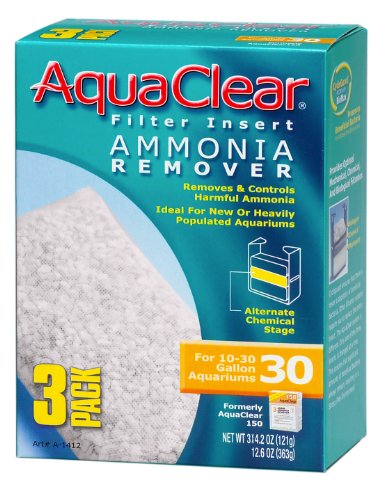
- Removes and controls harmful ammonia and nitrite
- Ideal for new or heavily populated freshwater aquariums
Understanding What Caused This: The Nitrogen Cycle Explained
Now that the crisis is being managed, you need to understand why this happened so you can prevent it forever. Betta ammonia poisoning occurs when the nitrogen cycle in your tank fails or hasn’t established yet.
The Nitrogen Cycle: A Simple Explanation
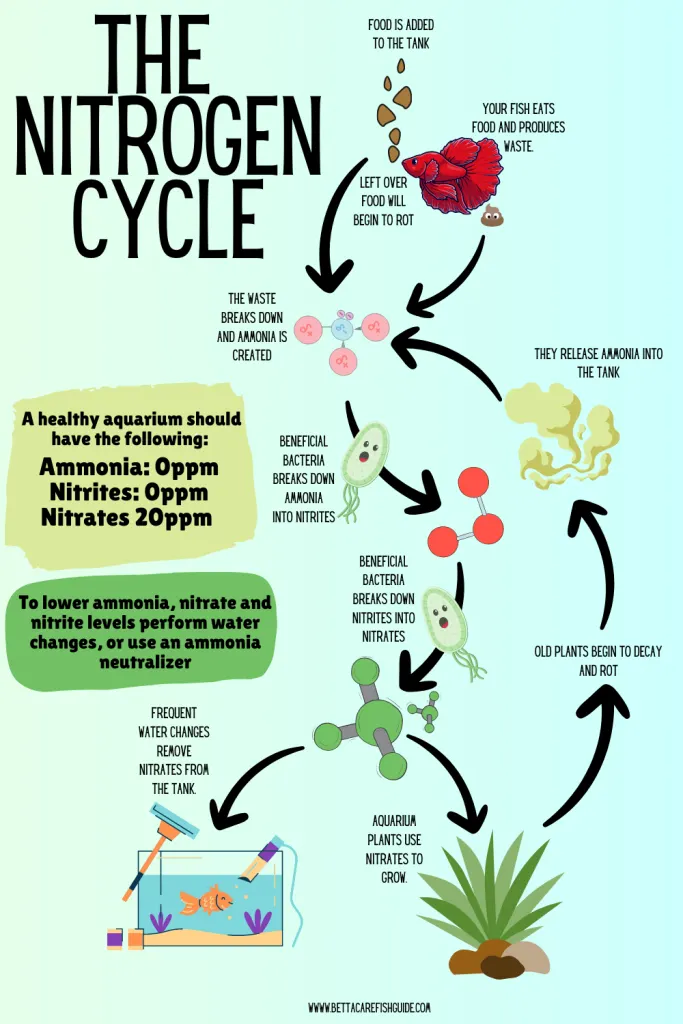
Think of your aquarium as a miniature ecosystem that must process waste continuously. Here’s how it works:
- Fish produces waste → Creates Ammonia (NH₃) – HIGHLY TOXIC
- Beneficial Bacteria #1 (Nitrosomonas) eats ammonia → Produces Nitrite (NO₂) – ALSO TOXIC
- Beneficial Bacteria #2 (Nitrobacter) eats nitrite → Produces Nitrate (NO₃) – LESS TOXIC
- You remove nitrates → Through weekly water changes
The problem: This bacterial colony takes 6-8 weeks to establish fully in new tanks. During this “cycling” period, ammonia and nitrite can spike to lethal levels.
Common Causes of Ammonia Poisoning
1. New Tank Syndrome (The #1 Cause)
A tank is a delicate ecosystem, and beneficial bacteria that break down ammonia take 6-8 weeks to become fully established. This means that during the cycling period before bacteria colonies develop, ammonia spikes are extremely likely and often severe. This is called “New Tank Syndrome” and it’s the leading cause of betta ammonia poisoning in new aquariums.
2. Decaying Organic Matter Buildup
If your tank has been established for a while and you’ve noticed betta ammonia poisoning, check for decaying matter: dead plants, rotting uneaten food, accumulated feces, and any decomposing biological waste produce ammonia rapidly. If your betta lives in a community tank, also check for dead tank mates – dead animals produce enormous amounts of ammonia during decomposition.
3. Infrequent or Inadequate Water Changes
Water changes dilute accumulated ammonia by replacing dirty water with clean water. The smaller your tank, the more frequently you must change water. If you’re not changing water often enough, ammonia levels will climb to toxic concentrations causing ammonia poisoning.
It’s especially critical to perform water changes much more frequently if you don’t have a filter in your betta tank. Without filtration, you’re relying entirely on water changes to remove ammonia – and most people underestimate how often this needs to happen.
4. Bacterial Colony Die-Off
Sometimes the beneficial bacteria colony in your established tank dies suddenly. This most commonly occurs when:
- You treat the tank with antibiotics that kill beneficial bacteria
- Your filter stops working for extended periods
- You replace all filter media at once instead of gradually
- You clean decorations and gravel with tap water (chlorine kills bacteria)
- Power outages cause filters to stop running for days
When bacteria colonies die, nothing neutralizes ammonia anymore, resulting in rapid ammonia spikes and poisoning.
How to Prevent Ammonia Poisoning Forever
Prevention is infinitely easier than treatment. Here’s your comprehensive prevention strategy:
1. Properly Cycle Your Tank BEFORE Adding Fish
The single most important thing you can do is cycle your tank before introducing your betta. Fishless cycling is the humane gold standard:
- Set up your complete tank (filter, heater, substrate, decorations)
- Add an ammonia source (pure ammonia or fish food)
- Wait 6-8 weeks while beneficial bacteria colonize
- Test daily until ammonia and nitrite both read 0 ppm consistently
- Only then add your betta to a fully cycled, safe environment
Can’t wait 6-8 weeks? Add bottled nitrifying bacteria (like Tetra SafeStart Plus or API Quick Start) to accelerate the process, but still expect 3-4 weeks minimum.
2. Add Nitrifying Bacteria
One of the best investments for preventing ammonia poisoning in tanks – ESPECIALLY new tanks – is adding bottled nitrifying bacteria. Nitrifying bacteria are the beneficial microorganisms that break down ammonia, making your tank safe for your betta.
The good news is you can buy concentrated nitrifying bacteria off Amazon for just a few dollars. Although it’s not an instant solution, establishing these bacteria colonies is absolutely necessary if you want your betta to stay healthy long-term.
3. Perform Regular, Consistent Water Changes
Water changes are one of the most beneficial maintenance tasks you can perform. They remove accumulated waste that your filter can’t process and replace it with fresh, clean water.
Recommended schedule:
- 5-10 gallon tanks: 25-30% weekly
- Smaller than 5 gallons: 30-50% every 3-4 days (or upgrade to larger tank)
- Larger than 10 gallons: 20-25% weekly
4. Use Proper Filtration
You absolutely must have a filter in your betta tank. It’s dangerously common to see tanks with no filter or heater, but without filtration, there’s nothing to establish bacterial colonies or process ammonia. While bettas are hardy fish compared to some species, they still need their basic biological requirements met. (Why are filters so essential?)
5. Provide Adequate Tank Size
The smaller your tank, the faster it becomes polluted with toxic ammonia. You should house your betta in a minimum 5-gallon tank. Anything smaller than 5 gallons isn’t big enough – not only is it cruel to confine fish to inadequate space, but it’s also exponentially more work for you.
In smaller tanks, water parameters change rapidly and ammonia builds up dangerously fast. If you haven’t got a 5-gallon tank, you should definitely invest in a bigger one. Here are some of the best 5-gallon tanks on the market.
6. Don’t Overstock or Overfeed
More fish equals more ammonia production. More food equals more waste and uneaten food decomposition. Both scenarios create ammonia spikes:
- Feed only what your betta can consume in 2-3 minutes
- Remove uneaten food within 5 minutes
- Don’t add more fish than your tank’s filtration can support
- Fast your betta one day per week to reduce waste production
7. Clean Your Tank and Vacuum Substrate Regularly
Any decaying matter in your tank produces ammonia continuously – whether it’s decomposing plants, fish waste, or rotting food. You should be cleaning your tank regularly and using a gravel vacuum during water changes to remove accumulated waste from the substrate where it’s invisible but still producing toxins.
8. Test Water Parameters Regularly
One of the absolute best investments you can make is buying a quality ammonia test kit. It allows you to detect rising ammonia levels before they become life-threatening, giving you time to act proactively rather than reactively.
I highly recommend the API Master Test Kit. Not only does it test for ammonia, but you can also check pH levels, nitrites, and nitrates – all critical parameters for maintaining a healthy aquarium ecosystem. You can get the API Master Test Kit off Amazon for a reasonable price, and it lasts for hundreds of tests.
Testing schedule:
- New tanks: Daily for first 8 weeks
- Established tanks: Weekly
- After medication: Daily for 2 weeks
- After any tank changes: Daily for 1 week
9. Always Use Water Conditioner
Never add untreated tap water to your tank. Chlorine and chloramines in tap water kill beneficial bacteria and stress fish. Always use a quality dechlorinator like Seachem Prime, which also detoxifies ammonia and nitrite as a bonus benefit.
Frequently Asked Questions About Betta Ammonia Poisoning
Will my betta recover from ammonia poisoning?
Recovery is possible and even likely if you catch it early and treat aggressively. However, the prognosis depends on several factors: the severity and duration of exposure, how quickly you began treatment, and whether permanent organ damage occurred.
Mild cases (caught within 24-48 hours): 80-90% recovery rate with full treatment
Moderate cases (3-5 days exposure): 50-70% recovery rate, possible permanent gill damage
Severe cases (prolonged exposure): 20-40% recovery rate, high risk of permanent brain, gill, or organ damage
Bettas that survive severe ammonia poisoning may have reduced quality of life due to compromised respiratory function or neurological damage.
Will his fins and gills heal if they were burned?
Often, yes – with pristine water conditions and time. Fin tissue regenerates remarkably well in bettas, though severely damaged fins may grow back with slight irregularities or scarring. Gill tissue also has regenerative capacity, but severe burns can cause permanent respiratory impairment.
Healing timeline:
- Gills: Begin healing within 1-2 weeks, full recovery 4-8 weeks
- Fins: Visible regrowth in 2-3 weeks, complete restoration 2-4 months
- Body burns: Surface healing 1-3 weeks, complete recovery varies
The key to optimal healing is maintaining ammonia at 0 ppm with perfect water quality throughout the recovery period.
How long does ammonia poisoning take to kill a betta?
This depends on ammonia concentration. At extremely high levels (5+ ppm), death can occur within hours. At moderate levels (1-3 ppm), fish may survive days to weeks with progressive damage. At low chronic levels (0.25-0.5 ppm), fish may linger for weeks but suffer cumulative organ damage.
This is why immediate action is critical – every hour counts when ammonia levels are elevated.
Can I use aquarium salt for ammonia poisoning?
Aquarium salt does NOT neutralize or remove ammonia. However, it can help support healing by:
- Reducing osmotic stress on damaged tissues
- Providing some protection against secondary infections
- Supporting gill function temporarily
Use salt as a supplement to proper ammonia treatment, never as a replacement. Dose at 1 tablespoon per 5 gallons maximum, and only if you have no live plants.
When is it time to consider euthanasia?
This is the most difficult decision any fish keeper faces. Consider humane euthanasia if your betta shows:
- No improvement after 5-7 days of aggressive treatment
- Complete inability to swim or maintain position
- Continuous gasping despite 0 ppm ammonia
- Obvious suffering with no quality of life
- Severe bleeding from gills that won’t stop
- Complete refusal of food for more than 7 days
Consult an aquatic veterinarian before making this decision. If euthanasia becomes necessary, the clove oil method is considered most humane. This is always a last resort when suffering cannot be relieved.
What’s the difference between ammonia and nitrite poisoning?
Both are part of the nitrogen cycle and both are toxic, but they affect fish differently:
Ammonia poisoning: Burns gills and skin externally, causes red/purple gills, creates visible lesions and burns
Nitrite poisoning: Affects blood oxygen internally, causes brown/chocolate-colored blood, creates “brown blood disease,” fish appears normal externally but can’t transport oxygen
Treatment for both involves water changes and water conditioners, but nitrite poisoning specifically benefits from aquarium salt which helps block nitrite absorption.
Can a betta survive in a bowl without getting ammonia poisoning?
No, not long-term. Bowls are death traps for bettas because:
- Insufficient water volume to dilute ammonia
- No filtration to establish beneficial bacteria
- No heater to maintain proper temperature
- Ammonia builds up within hours, not days
Even with daily 100% water changes, bowls cause chronic stress. Minimum acceptable housing is 5 gallons with filter and heater.
Is ammonia poisoning the same as “new tank syndrome”?
Yes, they’re the same thing. “New tank syndrome” is simply the common name for ammonia (and nitrite) poisoning that occurs in uncycled tanks before beneficial bacteria establish. It’s not a separate condition – it’s ammonia poisoning caused by the specific circumstance of a new tank.
Conclusion: You Can Save Your Betta
Ammonia is the silent killer in aquariums, but now you have the knowledge not only to save your betta from this crisis but to provide a safe, stable environment for years to come. The key principles that will keep your betta healthy are simple:
- Test regularly – Catch problems before they become emergencies
- Cycle properly – Never add fish to uncycled tanks
- Change water consistently – This is non-negotiable
- Act immediately – Every hour matters when ammonia spikes
- Maintain proper filtration – Beneficial bacteria save lives
If your betta is currently suffering from ammonia poisoning, don’t lose hope. Many bettas make full recoveries with aggressive treatment and dedicated care. Follow the emergency protocol outlined in this guide, test your water religiously, and maintain pristine conditions throughout recovery.
Remember: this happened not because you’re a bad fish keeper, but because you didn’t have the right information. Now you do. Use this knowledge to become the aquarist your betta deserves.
Want comprehensive information on taking care of your betta beyond ammonia management? Check out our complete betta fish care guide covering all aspects of betta health and husbandry.
Quick Recap: Key Takeaways
- Betta ammonia poisoning is a common and potentially fatal emergency, especially in new tanks
- Emergency treatment: 50% water change + ammonia detoxifier + stop feeding immediately
- Key symptoms: Red/purple gills (most important), gasping, lethargy, clamped fins, loss of appetite
- Main causes: Uncycled new tanks, decaying matter buildup, infrequent water changes, bacterial colony die-off
- Treatment: Daily 25-50% water changes + re-dosing detoxifier until ammonia stays at 0 ppm for 48+ hours
- Prevention: Properly cycle tanks before adding fish, test water regularly, perform consistent water changes, use adequate filtration, don’t overfeed
- Recovery: Possible in most cases if caught early; permanent damage can occur with prolonged exposure
- Testing is mandatory: Use liquid test kits (API Master Test Kit recommended), not test strips
⚠️ FINAL REMINDER: If your betta shows no improvement after 48 hours of treatment, or if you’re uncertain about any aspect of care, please consult a qualified aquatic veterinarian immediately. Severe ammonia poisoning can cause permanent organ damage requiring professional medical assessment and treatment.


